In the final stanza of his now famous 1875 poem Invictus, British poet William Ernest Henley (1849-1903) declared, “It matters not how strait the gate, how charged with punishments the scroll; I am the master of my fate, I am the captain of my soul.” The title of the poem which was added later by an editor of Henley’s poems in 1900 is Latin for “invincible.” Invictus has since come to be widely admired across cultures as the quintessential statement of rugged, Victorian-era stoicism, fortitude and courage in the face of adversity no matter how great.
As a very young man, Henley himself endured tremendous personal adversity, first in losing his left leg to amputation at age 16 due to complications from tuberculosis, and then in nearly also losing his right leg to the disease but for 20 months of intense treatment by renowned English surgeon Joseph Lister. One can well imagine how this extreme adversity helped to shape Henley and bring forth in him a certain fearless determination that found its way into his verse.
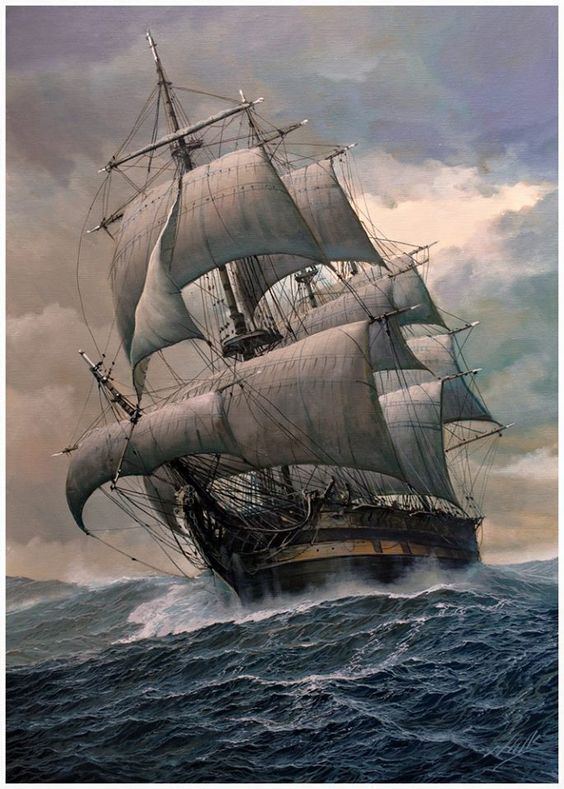
The final lines of Henley’s poem evoke the imagery of a sea captain bravely steering “the ship of his soul” through the many storms of life without flinching or despairing even when it appears that all is lost. Invictus is generally understood as a tribute to the indomitable human spirit—to the invincible Man Among Men who despite every blow he is dealt in life finds his head to be “bloody but unbowed” thanks to his “unconquerable soul.”
But what does Invictus really do? Doesn’t it pay tribute to the spirit of human insolence and defiance? Defiance to God and manly but vain struggle apart from God? According to Henley, the Invictus Man charts his own course in life and doggedly follows it to the bitter end despite how God might be using adversity to get his attention, teach him important lessons, and warn him of things to come.
Henley declares in the final stanza of Invictus that “it matters not how strait the gate”—a defiant allusion to Matthew 7:14 in which Jesus warns of the extreme difficulty of passing through the narrow gate of His kingdom to eternal life with Him. In the same stanza, Henley brazenly declares that “[It matters not] how charged with punishments the scroll”—again, a defiant disregard for the notion of a holy and just God who awaits us all at the end of our lives to judge us according to our works as He has recorded them.
The sentiments of Invictus are similar in some ways to those expressed in works like Theodore Roosevelt’s 1910 The Man in the Arena speech excerpt and the song My Way popularized by Frank Sinatra in 1969. Like Invictus, both works speak of manly struggle apart from God and at least implicitly of defiance to God.
The world in rebellion against God instinctively admires such sentiments because they are tantamount to an enraged humanity shaking its tiny fists in God’s face. It is no wonder then that Oklahoma City bomber Timothy McVeigh, mass murderer of 168 helpless, unsuspecting victims including 19 innocent children in 1995, chose Invictus as his final statement to the world before his execution on June 11, 2001.
The Bible sternly warns, however, that “It is appointed unto man once to die, and after this the judgment,” Hebrews 9:27, and that God will “render to each man according to his work,” Proverbs 24:12. Proverbs 29:1 also warns that, “He who is often rebuked and hardens his neck will suddenly be destroyed and that without remedy.”
Surely anyone who willfully disregards the many God-ordained rebukes of life and defiantly claims to be the “master of his fate” and the “captain of his soul” despite the dire warnings of Scripture is an utter fool for whom only devastating personal shipwreck and the loss of his own soul in Hell await.
What must you do to avoid the shipwreck and loss of your own soul? The answer is to heed God’s warnings and turn over the helm of your soul to the Lord Jesus Christ as Master and Captain of your ship while you still can! Only Christ has already successfully navigated the hazardous waters of this world without bringing Himself to ruin, and only He can guide you through the stormy and dangerous waters that lie ahead and safely bring you into His eternal kingdom, your final port of call in Him.
Don’t be a fool because you are not invincible. Surrender the ship of your soul to Jesus today!
 Do You Want to Be Made Well?